
The Met Gala Got Inclusivity Right This Year. Now What?
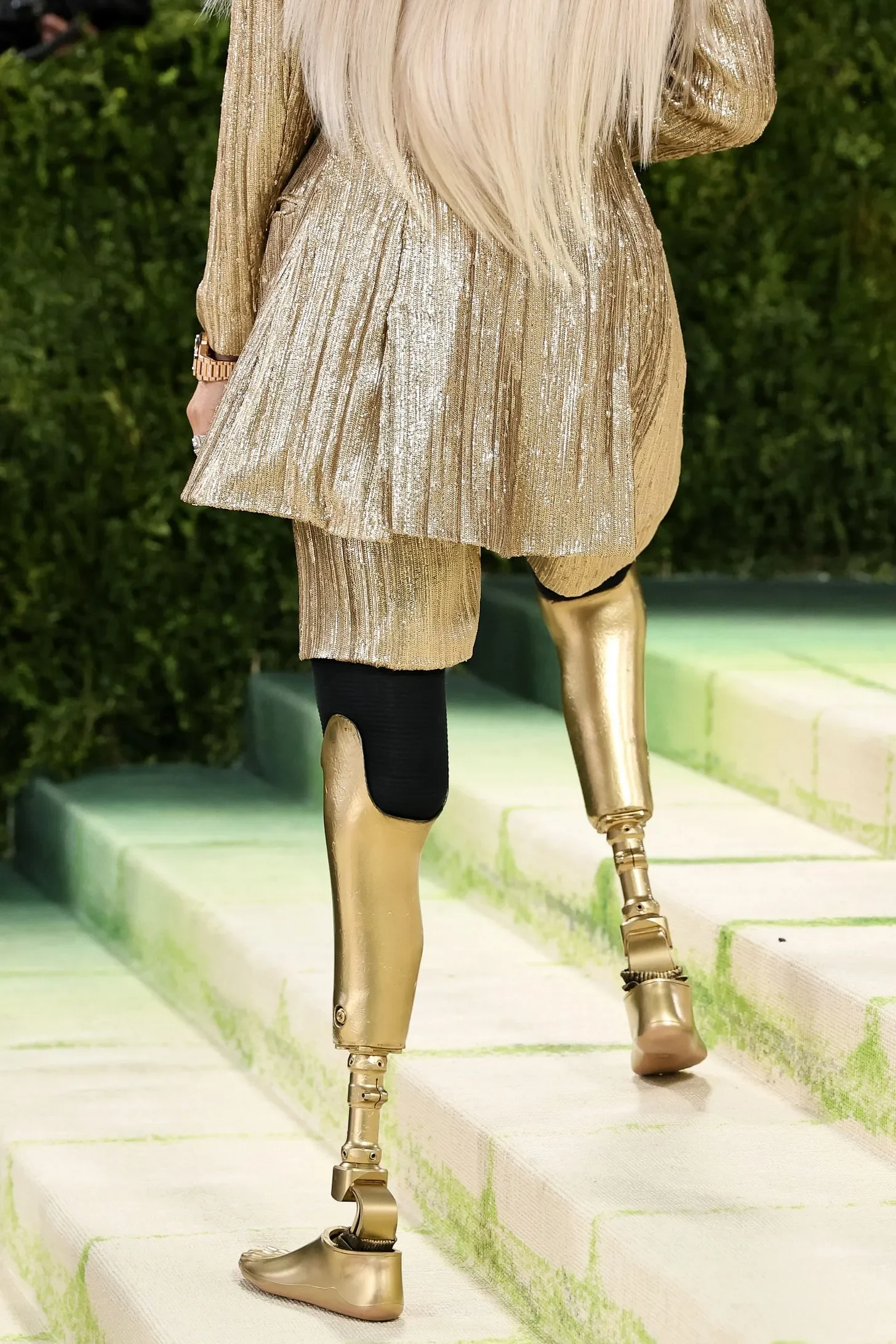
Lauren Wasser’s gold prosthetic legs. Her gold ensemble was our absolute favourite of the evening.
Who knew that the first Monday in May could be so… inclusive?
For an industry so rooted in its obsessiveness over body shapes and sizes, the 2026 Met Gala red carpet looked very different for all the right reasons.
The iconic steps where countless celebrities and designers have stopped to pose in their inspired creations were still there, but this year (for the first time ever), the gala was accessible. Once an almost visual symbol of the exclusive and inaccessible nature of the fashion world, the Met Gala worked closely with disability groups such as Tilting the Lens to remove the steps from the actual entrance, and thus, in theory, welcoming everyone of all abilities. And this wasn’t just an arbitrary concession, with the accessible entrance relegated to a back door or alley. As advocate Sinéad Burke, the frontrunner of the inclusivity team, wrote on social media, “It was important to create the adjacent step-free entrance as a secondary route, one that is as aesthetically pleasing, as engaging, and as welcoming as the stairs for anyone who needed it.” This accessible entrance was front row centre, and in doing so, it brought inclusivity to the forefront from the very beginning.
Inside, "Costume Art: The Body, Perception, and Fashion" did something the institution hasn't typically managed to do well in its 78-year history. An entire gallery was devoted to the examination of disability and fashion, from Victorian prosthetics disguised as limbs to contemporary designers building clothes around mobility issues. Another room explored pregnancy's temporary but profound reshaping of the body, and (in a rarity for the industry), plus-size mannequins wore haute couture cut for their actual proportions (rather than scaled-up versions of straight-size patterns). Andrew Bolton, the curator of this year’s exhibition, explained to Vogue, “The simple thesis for the show really is the fact that the dressed body is the connecting thread throughout the entire museum.” His hope for the collection, and those who come to view it, is that people will “Reflect on your own lived experience, hopefully to create a connection, empathy, compassion towards each other.”
The exhibition's premise—that fashion shapes how we see bodies, and bodies shape how we make fashion, all in symbiotic harmony—sounds obvious until you realise how rarely museums (let alone society) actually demonstrate it. Most costume exhibitions present garments as art objects divorced from the flesh that animated them. Instead, this one made the relationship explicit in an art form. It also brought it into reality, featuring wardrobes of disabled people such as Aariana Phillip, a musician, runway model and the first-ever disabled, black, trans woman to feature on the red carpet, stunning in a custom Collina Strada designed specifically for her body.
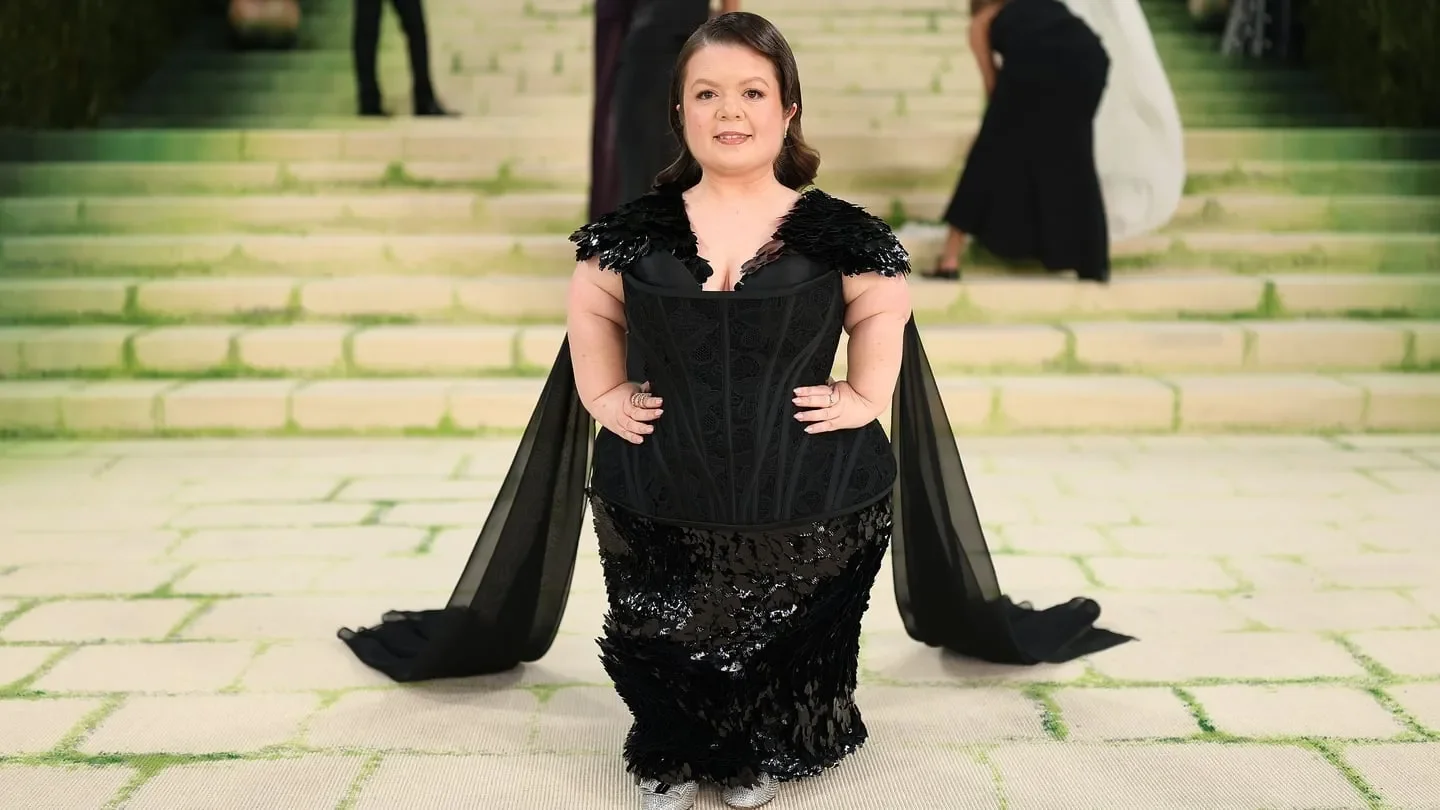
Sinéad Burke at the 2026 Met Gala
Sinéad Burke, writer, disability advocate, and another featured “body” in the exhibition, also brought a new vision of fashion to the event, in a structured and dramatic Christian Siriano gown perfectly tailored to her proportions. Her look, however, was simply the final piece of months of ongoing work behind the scenes. The Met hired her as a consultant specifically to identify barriers the institution had normalised, challenge them, and then help create new avenues to an inclusive event. She pointed out that the gala's traditional format—long stairs, standing-only cocktail hour, narrow aisles between tables—functionally excluded disabled attendees regardless of whether they received invitations. In response, the 2026 event was the very first in history to have added ramps, reserved seating areas, adjusted the schedule to allow for rest, and provided mobility aids backstage for anyone who needed them. This, alongside her work aiding in championing the “Disabled Bodies” section of the exhibit, was the answer to something she herself had been looking for in fashion for a long time. Her goal for the event was that it would become “An explicit and radical invitation for disabled people to see themselves in fashion.”
And an explicit invitation it was. Lauren Wasser, who lost both legs below the knee to toxic shock syndrome and has been modelling on prosthetics for years, was one of those who took up the call. For the Met, she flaunted her iconic gold pins and commissioned Prabal Garung to complement them with a gilded gold oversized suit. Where others missed the mark, it was instantly obvious Lauren’s innate understanding of the theme, and she was named to multiple best-dressed lists. And a point of note: it wasn’t on the "best-dressed despite," nor "inspiring look from." It was the same lists as every other woman featured on the carpet.
But the fact that we're calling this development remarkable in 2026 says everything about how slowly fashion evolves when it comes to bodies outside its traditional scope. The industry has spent the last decade talking about inclusion as a buzzword, while changing very little about who designs clothes, who models them, who they're cut for, and who can access the spaces where they're shown. Yet major fashion weeks still schedule shows in venues with inadequate accessibility. Most haute couture houses don't consider adaptive needs during the design process. The Met Gala's history includes exactly three wheelchair users on the red carpet before this year. Three, in a 78-year period. **
So yes, this year's Met Gala matters. Sinéad Burke's consultation created a template other institutions can follow. The exhibition's framing—disability as design consideration rather than medical category—offers a vocabulary fashion badly needs. The red carpet's visual proof that disabled bodies in high fashion look exactly right will hopefully make it harder to justify their continued absence.
Unfortunately for those on the margins, the fact that this counts as progress, that we're celebrating a single gala for doing what should be baseline, reveals how far the industry still has to go. One accessible event doesn't remake a system. One inclusive exhibition doesn't change who gets hired to design, style, photograph, and write about fashion. The models who appeared on the 2026 red carpet have been working for years. The designers who know how to cut for diverse bodies have been doing it without institutional support. The disabled people who want to engage with fashion as consumers, creators, and critics have been here the entire time. What changed wasn't their presence. What changed was that, for one night, one of fashion's most visible institutions decided to see them…for one night. **
The question now is whether this was an anomaly or a turning point. Will other events adopt similar accessibility practices? Possibly. Will we see fashion publications feature disabled models outside of March (Disability Awareness Month)? It remains to be seen. What also remains to be seen is if the fashion industry will recognise that disabled people aren't a niche market but a massive, underserved demographic with money to spend and opinions about how they want to look.
The 2026 Met Gala proved that inclusive fashion events are possible, that disabled bodies in haute couture look extraordinary, and that accessibility can be integrated without compromising aesthetics. That’s not to say that they weren’t accomplishments. But when the cameras are off, and the red carpet is rolled up, the question becomes: what changes tomorrow?
Whether fashion follows this new direction will determine if 2026 was the year everything changed or just the year one gala got it right. There is the potential for this to be progress instead of performative.
The team behind the Met just need to put their (excessive amount of) money where their mouth is.
About Wayfarer Mobility
Wayfarer Mobility exists because we’re tired of mobility aids being treated like purely clinical equipment, something you’re expected to hide or “make do with.” We’re redesigning them from the ground up—fashion-forward, design-led mobility aids that are innovative, functional, and genuinely wearable.
If you carry a mobility aid every day, it becomes part of your outfit and part of how you move through the world. It should reflect your style, not work against it.
We wrote this article because accessibility and representation aren’t “special topics”. They’re the baseline of who gets to participate in culture (and fashion) in the first place. When events like the Met Gala get it right, it’s worth naming why it matters and holding the industry to a higher standard than a single night of progress.