
From Medical Device to Must-Have: The Evolution of Eyewear
There was a time—not so long ago—when needing glasses meant resigning yourself to a narrow corridor of options. Thick plastic frames in beige or tortoiseshell, the classic “Coke-bottle” frames, or the thin, wiry kind that were more akin to something a history professor would wear. Basically, the aesthetic range of a hospital corridor, because that’s essentially what they were: medical devices prescribed purely to correct deficiency.
If you wore glasses, you wore glasses. The object preceded the person.
Today, eyewear is a language. Different frames indicate different personalities and styles. We collect them like jewellery, rotating styles with moods and occasions. Some people who wear glasses don’t need vision correction at all—choosing frames the way they might choose earrings or a watch, simply because they complete the look.
The transformation is so complete that it’s easy to forget how recent it is. How did we get from corrective equipment to covetable accessory? And what does this evolution reveal about how functional objects become fashion—and who gets left behind in the process?
“Eyeglasses”, as they were first named, emerged in 13th century Italy as purely utilitarian objects. Early iterations were crude: two magnifying lenses connected by a bridge, balanced precariously on the nose. For centuries, they remained simple tools of necessity, often significantly expensive for the average person, and wearing them marked you as someone ageing or scholarly. They were physical deficit made visible. By the 20th century, mass production had made glasses more accessible, but not more desirable. The aesthetic vocabulary remained stubbornly clinical. Optometrists, not designers, determined what frames looked like. Function dictated form entirely. You chose glasses the way you might choose crutches: by fit and prescription, not by style. The message was clear: if you needed vision correction, personal taste was a luxury you’d forfeited.
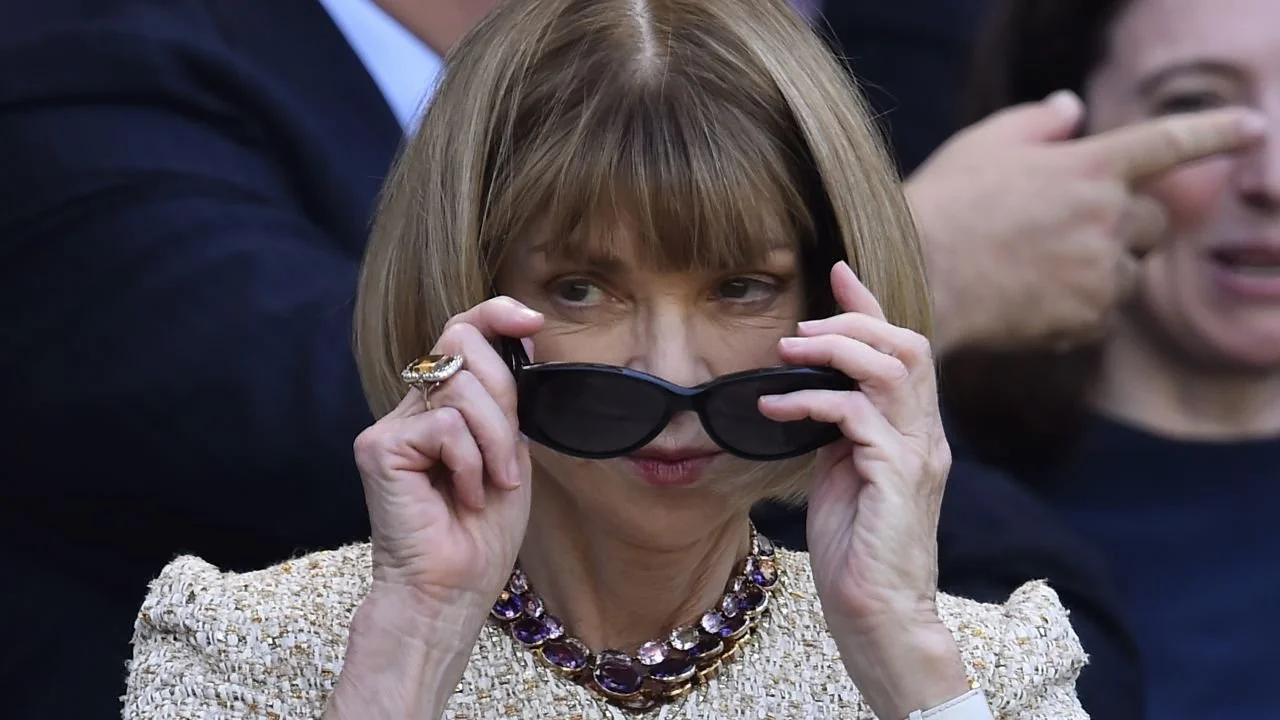
The cultural turning point arrived in the 1960s and 70s. Suddenly, glasses appeared on faces that didn’t need them—fashion editors, musicians, cultural figures who adopted frames as signature elements of their aesthetic. Think of John Lennon’s signature circular wireframes, or the oversized dark sunglasses that became synonymous with mid-century Hollywood glamour, a la Audrey Hepburn. Designers began to notice. If frames could be fashion, why were they still being designed like medical equipment?
The 1980s brought the first wave of designer eyewear—luxury fashion houses lending their names to frames that cost as much as handbags. But this remained a premium market, accessible only to those who could afford both the label and the lenses. For most people, glasses were still purchased at optometry offices and selected from limited stock, with functionality prized above all else.
The real democratisation came in 2010, when Warby Parker arrived with a deceptively simple premise: glasses should be affordable, stylish, and easy to buy. They bypassed traditional optical retail entirely, selling directly to consumers online, even offering home try-on programs. They made frames that looked like they belonged in a boutique instead of a medical clinic. More importantly, they repositioned the entire category. Glasses weren’t medical devices you reluctantly purchased when your prescription changed, but instead they became accessories you collected, a piece you desired rather than just required. The language shifted from correction to curation.
Warby Parker proved that people would pay attention to eyewear design if someone bothered to design eyewear worth paying attention to. Within a few years, the market exploded. Indie brands emerged with distinct aesthetic points of view—Garrett Leight’s California ease, Oliver Peoples’ understated luxury, Moscot’s New York heritage. Legacy brands evolved, and even drugstore readers started appearing in considered colourways and shapes as glasses had officially crossed over the line drawn in the sand: they were now cool.
Several forces converged to enable this transformation. Lighter, more durable materials—titanium, acetate, carbon fibre—made glasses more comfortable for extended wear while expanding design possibilities. Frames could be thinner, bolder, more architectural. Direct-to-consumer models meant brands could offer better design at lower price points while maintaining margins, speaking directly to customers and building brand identity rather than competing for shelf space in optometry offices. As glasses became fashion accessories for people who didn’t need vision correction, the stigma dissolved entirely. Wearing glasses shifted from marking deficiency to signalling style. The most successful eyewear brands didn’t just make frames that happened to look good as a byproduct, but in fact, they approached eyewear as a design category worthy of the same attention as any other fashion item. And once people experienced well-designed, thoughtfully branded eyewear, there was no going back.
The category had been elevated. There was no going back to beige plastic and apologetic aesthetics.
The eyewear evolution offers a blueprint for how functional objects become fashion. Yes, they made medical devices “prettier.”. They also fundamentally question the assumption that function and form must be opposing forces, that needing support means forfeiting style. Warby Parker didn’t accept that eyewear had to be expensive, clinical, or sold through optometry offices. They questioned every inherited constraint and rebuilt from first principles. As glasses became fashionable, wearing them became a choice people made confidently rather than reluctantly. Better design at accessible price points expanded the market—people who once owned one pair of glasses now owned several, and those who previously went without were beginning to afford a pair of their choosing. The category grew not by capturing market share, but by creating new demand. The most enduring eyewear brands built distinct points of view, visual languages, and communities.
But for all the progress in eyewear design, gaps remain even now. Many frames are still designed around averaged facial measurements that don’t account for diverse nose bridges, face widths, or anatomical features. Fashion-forward options often sacrifice comfort for aesthetics, leaving people to choose between looking good and feeling good. And yet, eyewear remains more accessible—both culturally and economically—than other assistive devices. Vision correction is normalised in ways that mobility aids, hearing devices, or other supports are not. The eyewear revolution succeeded partly because glasses were already somewhat socially acceptable. The transformation was from tolerated to celebrated, rather than from stigmatised to accepted. The harder work—destigmatising mobility aids, making adaptive devices genuinely fashionable, creating choice where currently none exists—requires more than good design. It requires cultural shifts around disability and who gets to move through the world on their own terms.
The world seems to hold endless possibilities that have not been explored. Because if glasses could transform from a medical device to fashion accessory, what else could? The answer lies not in superficial aesthetics—slapping patterns on medical equipment and calling it design—but in genuine reimagining. In asking: what if we started from the assumption that people who need functional support also deserve beauty, choice, and self-expression? What if we designed for real bodies, real lives, real desires, not clinical averages or institutional procurement? What if we refused to accept that needing support means accepting compromise?
The eyewear industry proved that when you offer people well-designed options that respect both their needs and their taste, they respond. They don’t just buy the product. They build relationships with brands. They become advocates for the idea that function and form can coexist—that disability and style aren’t contradictory concepts.
The evolution of glasses isn’t finished. But it’s far enough along to light the way for other categories still trapped in clinical aesthetics and limited thinking. The question isn’t whether transformation is possible. Eyewear already proved it is.
The question is: what are we waiting for?
Wayfarer exists because mobility aids are still where eyewear was sixty years ago: clinical, institutional, ugly, boring. We’re building a first-of-its-kind system that converts between cane and crutch, designed so that people whose needs shift day to day don’t have to choose between two separate pieces of equipment. And we’re completely rethinking the aesthetics while we’re at it, because there’s no reason functional support has to look like it came from a hospital procurement catalogue.
We’re building mobility aids that treat the people who use them as whole people. Not equipment with a coat of paint, but objects that integrate into someone’s life, wardrobe and sense of self.
The eyewear industry had its Warby Parker moment. Mobility aids are overdue for theirs. And we intend to be it.
If you want to be part of shaping what comes next, you can:
Join the Wayfarer Facebook community: Join here →
Share your voice in our survey: Take the survey →
Follow Wayfarer Mobility on socials: @wayfarer_mobility